
Research Fit: How to Match Your Interests to a Professor's Work
What fit actually means
Two people can both study the brain and have nothing to say to each other. One records from single neurons in mouse visual cortex to ask how contrast gets encoded. The other runs fMRI on humans doing moral-reasoning tasks. Same organ, sometimes the same department, and almost no shared daily work. If you emailed the second person saying you find the brain fascinating, you would sound like every other applicant, and you would deserve the silence you got.
Research fit is narrower than a field, and much narrower than most applicants think. It is not "we are both in machine learning." It is not "we both do molecular biology." Those are categories, not overlaps. Real fit is a shared question, a shared method, or a shared way of approaching a problem. "We are both interested in memory" is not fit. "We both care about how sleep consolidates memory, and we both work with the kind of hippocampal recordings that let you watch replay happen" is fit. You could have a specific argument with that person. That is the test: could the two of you disagree productively about something concrete tomorrow?
When admissions committees and individual professors talk about fit, this is what they mean, even when they say it vaguely. They are asking whether you would slot into work that is already happening, or whether you are a stranger who admires the building from outside.
Why fit beats a famous name
Professors admit and fund students who fit their work because they need people who can contribute to their actual projects. A grant has aims. Those aims have deadlines and deliverables. When a professor reads your application, some part of their brain is asking a blunt, practical question: can this person help me do the thing I already promised a funding agency I would do? A student whose interests line up with an active project is an answer to that question. A brilliant student with unrelated interests is a maybe, a bet, a future retraining cost.
So fit improves your odds of getting in. It also improves almost everything after. You will be happier day to day because you care about the thing you are grinding on at 9pm. You will be more productive because you are not translating between what you want to do and what the lab does. And your letters of recommendation will be stronger, because a professor who has watched you do relevant, self-directed work can write three specific paragraphs, while a professor supervising you on something you tolerate can only write that you were reliable.
Here is the part people resist. A prestigious lab where you do not fit is worse than a great-fit lab with a smaller name. The famous lab gives you a line on your CV and, often, an overworked advisor who forgets your project. The great-fit lab gives you an advisor who thinks about your problem in the shower and introduces you to the three people in the world you most need to know. Five years is a long time to spend somewhere for the logo. I would take genuine fit over reputation almost every time, and I say that as someone who once wanted the logo very badly.
Topic fit and method fit are different things
Fit runs in two directions, and applicants usually only think about one. The first is topical: you and the professor care about the same questions or problems. You both want to understand antibiotic resistance, or fairness in ranking algorithms, or how coastal sediment moves. The second is methodological: you both use, or you want to learn, the same techniques, tools, or approach. Cryo-EM. Causal inference on observational data. Long-term ethnographic fieldwork. Reinforcement learning. Patch clamp.
The strongest fits usually have both. You care about the same question and you work in the same way. But hear this clearly: a methods match can matter as much as a topic match, and sometimes more. Labs frequently need a skill they do not have. A neuroscience lab drowning in imaging data may desperately want a student who can actually write the analysis pipeline. A theory-heavy economics group may want someone who can run a clean field experiment. In those cases, your method is the fit. You are the missing piece, and the topic is negotiable.
This is freeing if you have felt boxed in. Maybe your undergrad research was on a topic you have cooled on, but you got genuinely good at a technique. That technique is a door. When you read a professor's work, ask both questions: do I care about what they are asking, and do I already do, or want badly to learn, how they are answering it? Either can be your way in. Both is where you want to end up.
Figure out your own interests first
Most applicants cannot describe their interests with any precision, and it shows. They write "I am broadly interested in artificial intelligence and its applications," which tells a professor nothing and quietly signals that the writer has not done the reading. Before you can find fit with anyone, you have to know what actually pulls at you.
Read widely across your field, more widely than your coursework forced you to. Then pay attention to your own reactions. Which questions nag at you after you close the paper? Which results made you sit up, and which ones made you shrug even though you were supposed to be impressed? A useful and slightly embarrassing test: what do you read on a weekend, for no reason, when nobody is grading you? For me it was papers on how animals estimate time, which had nothing to do with my assigned project and everything to do with what I actually wanted. That signal is worth more than any ranking.
Think back to a class or a project that lit you up, and get specific about why. Was it the question, the method, the messiness of real data, the moment a model finally predicted something? The texture of that memory tells you what kind of work you want. And give yourself permission to be interested in a cluster of things rather than one narrow topic. Almost nobody arrives with a single laser focus, and the ones who claim to often just have not read enough yet to know what else is out there. A coherent cluster is fine. "Everything" is not.
How to actually read a professor's work
The mistake here is famous and easy to make: you read the professor's most cited paper, the one from a decade ago that made their name, and you build your whole pitch around it. Do not do that. Labs drift. The work that made someone famous is often not the work they do now, and you will be doing the now. Reference the old classic and you signal that you skimmed a Wikipedia-level summary.
Instead, read the last two or three years. Open their Google Scholar and sort by year, newest first. Read the recent titles, then the abstracts, then a couple of the papers in full. You are trying to reconstruct the questions they are asking this year, which are not always the questions on their lab website, because websites go stale. Look at what they are funded to do if you can find it, through grant databases or the acknowledgments sections of recent papers. Funding tells you what they are contractually excited about for the next few years.
Then do the move almost no one does: read their students' recent output. First-author papers by current PhD students, and recent theses if you can find them, show you where the lab is actually going, not where the PI's greatest hits were. The students are the leading edge. If three of them are suddenly working on something that barely appears in the PI's older work, that is the real direction, and that is what you would join. This same reading also quietly tells you whether the lab is active and growing, which connects to the separate but linked question of whether they are even taking students this cycle. A perfect fit with someone who is not recruiting is a heartbreak you can avoid with ten minutes of checking.
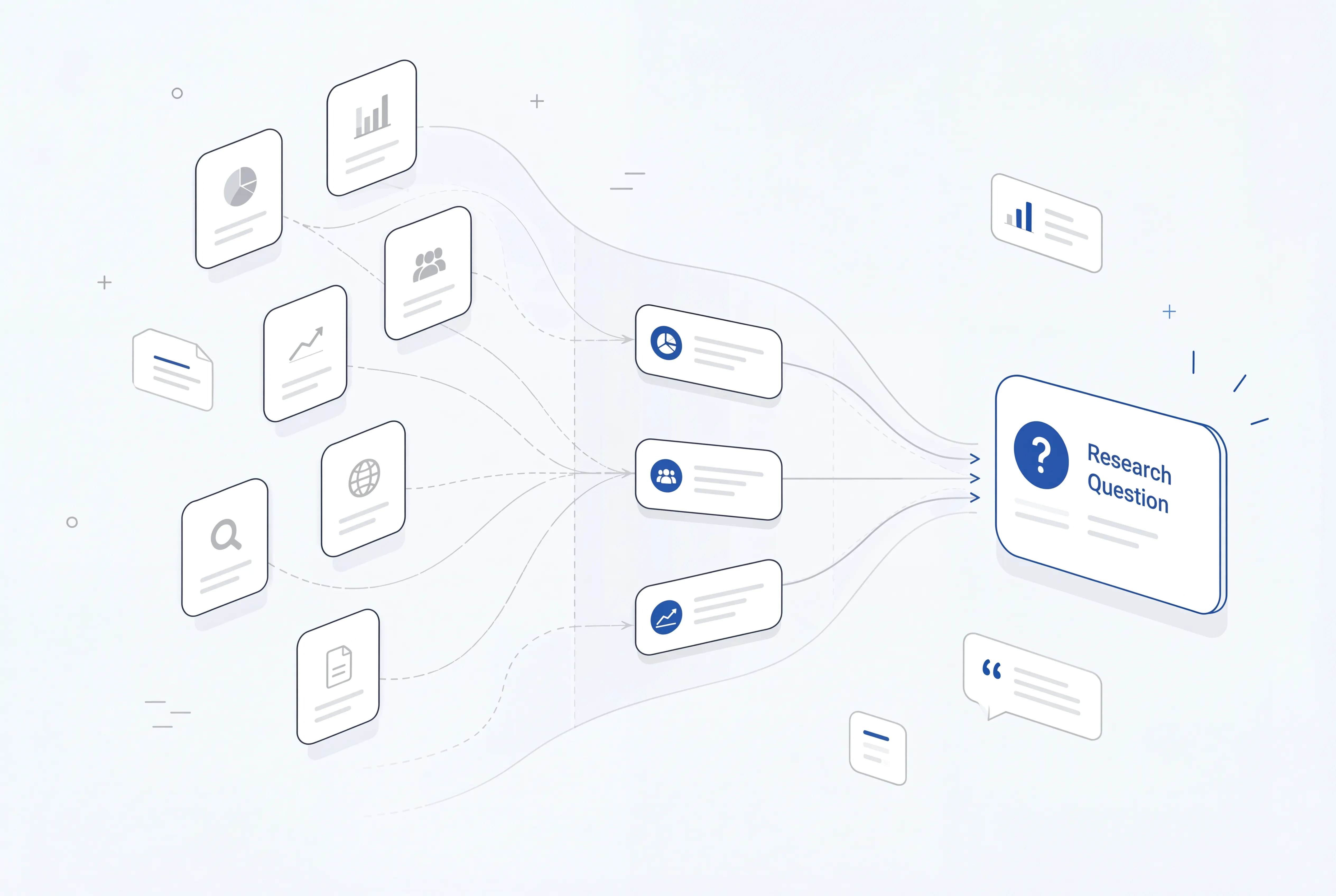
Do you like the topic, or the daily work?
This is the distinction that saves people from miserable PhDs, so slow down here. Loving the topic of a paper is not the same as wanting to spend years doing the work behind it. The paper is the trailer. The PhD is the film shoot: the same scene forty times, the equipment breaking, the grip standing in the rain.
A result about how bird migration responds to climate shifts is thrilling to read. The daily work behind it might be four weeks a year in a cold field at 4am, banding birds with numb fingers, and eleven months of cleaning messy count data in a spreadsheet. A theorem about the limits of a learning algorithm is beautiful on the page. Producing it looks like months at a whiteboard being stuck, most ideas dying, the proof refusing to close. A stunning single-cell atlas represents someone doing dissociations and quality-control filtering until their eyes cross.
Be honest with yourself about which daily work you can love, or at least tolerate for years, not just which results you admire. Ask yourself the ugly version of the question: on a Tuesday with nothing publishable in sight, doing the raw mechanics of this lab's method, would I be okay? If a professor's topics excite you but their day-to-day work sounds like a chore you would dread, that is not fit, no matter how much you like the papers. Better to notice now than in year three.
The Goldilocks problem: overlap plus something
Fit has a sweet spot, and you can miss it on either side. Too far is the obvious failure: no real overlap, so you would be asking the professor to supervise a line of work they have never done and cannot guide. You would be their student in name and nobody's apprentice in practice. That is a bad trade for both of you.
Too close is the failure people never see coming. If your interests and skills are an exact copy of what the lab already has, you are redundant. You bring nothing they do not already own. A professor with three students doing structural work does not urgently need a fourth who does the identical thing with no new angle. You want overlap, yes, but overlap plus something.
The sweet spot is genuine shared ground and a contribution only you add. Maybe you share their question but bring a method they lack. Maybe you share their method but want to point it at a new problem they have not touched. Maybe you sit at the seam between their work and a neighboring field you know well. Find that "overlap plus" and then say it out loud in one sentence: I work on the same problem you do, and I bring the computational side your recent papers say you have been outsourcing. That sentence is worth more than a page of admiration, because it tells the professor exactly why their lab is better with you in it. If you are still assembling your list of who to even approach, our guide on how to find a PhD advisor walks through building that shortlist before you get to this stage.
Saying it in your statement and your emails
Everything above is invisible unless you can put it on the page, and the way you put it is by being specific to the point of discomfort. Vague praise is the tell of someone who did not read the work. "I admire your groundbreaking contributions to the field" could be pasted into any application on Earth, and professors have seen it ten thousand times. It reads as noise.
Specific means naming the paper, the idea, and the concrete connection. Write a sentence only someone who actually read the work could write. Not "I am fascinated by your research on language models," but "your 2024 paper on retrieval-augmented factuality argued that grounding cut hallucination but hurt fluency, and I spent last summer building an evaluation that might separate those two effects." That sentence proves you read it, proves you have your own idea, and proposes a place you could plug in. It does three jobs in one breath.
The same rule governs your outreach email, where you have even less of the reader's attention. Lead with the specific connection, not with flattery. One real, sourced sentence about their recent work and how yours meets it will beat three paragraphs of "your inspiring lab." If you want the full anatomy of a message that gets replies, we wrote a whole piece on how to email a professor, but the core is the same as the statement: show, do not gush. Make them think, this person has clearly read my papers, before they have finished your second line.
Fit with the lab, not just one person
You are not marrying a single professor. You are joining an ecosystem, and sometimes the real fit lives in the ecosystem rather than the one name on the door. A PI whose own papers only half match you might co-advise with someone whose work matches you perfectly. The lab might have a collaborator down the hall who runs exactly the method you want. The group's collective direction, set as much by senior students and postdocs as by the PI, might be heading somewhere the PI's solo publications have not caught up to yet.
Read the lab as a unit. Who publishes with whom. What the group as a whole is drifting toward. And read the culture, because fit is human too. A lab can be a topical bullseye and a personal disaster if it runs on eighty-hour weeks and you need a life, or if it is silent and independent and you need collaborators. Talk to current students if you can. Ask what a normal week looks like, not what the highlights reel looks like. The culture question is quieter than the topic question, and it wrecks more PhDs.
Sometimes your interests genuinely span two professors, and that is common and can be a strength. An interdisciplinary angle or a formal co-advising arrangement can put you exactly at the intersection you care about, with two people invested in you. Be realistic about the cost, though. Two advisors can mean two sets of expectations that do not agree, two meeting styles, and moments where each assumes the other is handling you. Co-advising is wonderful when the two people already collaborate and respect each other, and a slow grind when they barely speak. Ask, before you sign up, how those two actually work together.
You will change, so pick range and one honest sentence
Your interests will shift during a PhD. Mine did, twice, and everyone I know can tell the same story. The question you arrive obsessed with may bore you by year two, because you will learn things that reframe what is even worth asking. This has a direct consequence for how you choose. Do not anchor on a hyper-narrow topic you might tire of. Anchor on a broader area you genuinely love, supervised by someone with range, someone who could still advise you well if your specific question moved. Ask yourself: if my exact question changed, would I still want to work with this person? If the honest answer is no, the fit is more fragile than it looks.
That is also why range in a professor beats narrowness. Someone who has published across a related span of problems can follow you as you evolve. Someone welded to one narrow method may not be able to, and then a shift in your interests becomes a crisis instead of a natural step. You want a person and a home you would not have to leave just because you grew.
Perfect fit is rare, and chasing it will only make you anxious. Aim instead for strong, genuine, specific overlap, plus the something extra only you bring. And here is the real test of whether you have it: can you explain the fit in one true sentence, naming the shared question or method and what you add, without a single word of filler? If you can say that sentence and mean it, you have found something worth applying to. This is also the exact thing tools like ApexApply are built to help with, matching your described interests to professors whose current research actually lines up and telling you why each one fits, rather than matching keywords and calling it a day. But the sentence is yours to earn. Read the recent work, be honest about the daily grind, find your overlap plus something, and write it down plainly. If you can do that, you are already ahead of most of the pile.